Stop smashing yourself with three VO2 Max sessions a week just because some fitness influencer on Instagram told you it would boost your fitness by 12 percent. Most of the time, they are just trying to burn you out for likes.
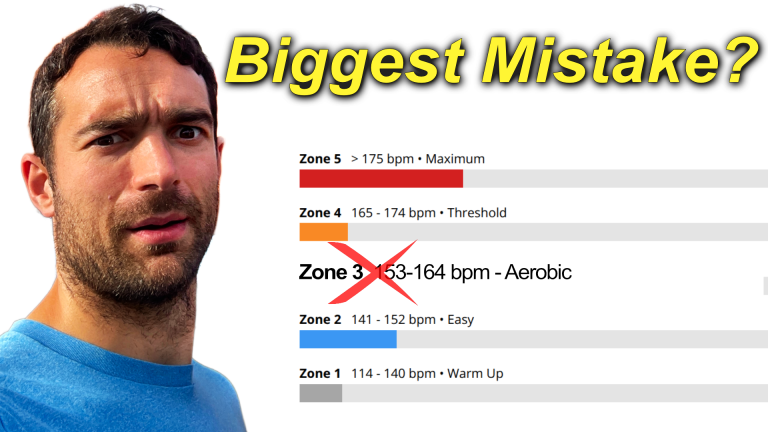
Let’s be honest: Zone 5 is bloody miserable. If you do it wrong, you won’t get faster. You will just end up hating your life and staring at your running shoes with genuine resentment. As a coach, I rarely prescribe this intensity right out of the gate. Here is the actual dosage you need to build a massive engine without the total burnout.
Your Heart is Just a Delivery Driver
Think of Zone 5 as a way to maximize your delivery system. It forces your heart to pump massive amounts of oxygen to your muscles. It sounds great on paper (more oxygen equals more speed, right?) but that is usually wrong.
Your heart is just the delivery service. Your muscles are the factory that actually has to process that oxygen. If you haven’t built that factory yet (which means increasing the number and efficiency of your mitochondria and developing a lactate shuttle) then all that extra oxygen just goes to waste.
You are revving your heart rate to the moon, but your muscles literally cannot process what they are being given. You don’t get faster: you just get tired.
Building the Factory First
Zone 5 has a place when you are pushing the absolute limits of your performance. It can give you an edge and help you recover faster, but it is not the only hard work you need. Depending on your current fitness and your target event, you might need something completely different.
If your race is over three minutes long, your need for oxygen is massive. You need it to break down fats and clear lactate for energy. This makes VO2 Max a limiting factor, but it is mostly just a representation of your potential. It is the size of your engine or the absolute ceiling of your aerobic power.
Having a massive engine does not make you fast if you can only sustain 60 percent of that power before falling apart. Real performance is determined by where your lactate threshold sits as a percentage of that max. Elite athletes dominate because they can race at over 85 percent to 90 percent of their VO2 Max for extended periods.
Why Low Intensity is Actually the Secret
If your “factory workers” (mitochondria) are overworked and untrained, they cannot use the materials they are given. In this case, you are better off training them to be more efficient using easier Zone 1 or Zone 2 training.
Low intensity work is also the most effective way to increase capillary density. These are the tiny blood vessels that deliver oxygen to the muscle cells. By doing longer Zone 1 and 2 sessions, you physically grow more of these vessels. This reduces the distance oxygen has to travel and gives your muscles more time to extract it from the blood.
How I Program This in Your Training Plans
I don’t just throw Zone 5 sessions into your calendar because they look “hardcore” on Strava. I use a specific hierarchy based on your testing data.
- The Threshold Gap: If your threshold is sitting at 70 percent of your VO2 Max, I keep you in Zone 2. You haven’t earned the right to suffer in Zone 5 yet. Your body can’t even process the oxygen it already has.
- The Timing: I only drop these sessions in when that gap closes to 80 percent or higher. This usually happens 8 to 12 weeks before your main race.
- The Frequency: It is almost always just one session a week. Usually on a Tuesday when your legs are fresh.
- The Block: I keep VO2 Max blocks short (around 3 to 4 weeks). This intensity is a double edged sword. It builds you up fast but can lead to injury or burnout if we overcook it.
The Exact Dosage
When I do put these into your plan, I want to force a very high heart rate and breathing rate. An ideal session looks like this:
- 4 x 4 minutes at the maximum sustainable intensity you can hold for that duration.
- 3 to 5 minutes of recovery between each rep.
If your reps are under three minutes, you probably won’t stay at a high enough heart rate long enough to cause adaptation. If you go over six minutes, you will likely get too fatigued to stay in the true VO2 Max zone. Aim for 12 to 20 minutes of total work at this level per session.
Just remember: do not neglect your threshold training once you start these. If you give your body more oxygen than it can use, you are wasting your time again. Keep building that factory so you can actually use the fuel you are delivering.